

A roof drainage system should be maintained as one continuous path.
Rain starts on the roof surface, concentrates in valleys, enters the gutter, passes through outlets and downpipes, then moves into a tank or stormwater system. A restriction anywhere along that path can cause overflow somewhere else.
Cleaning visible leaves is useful, but a thorough check also looks for silt, hidden outlets, poor fall, loose brackets, rust, failed joints, cracked tiles, deteriorated mortar, flashing problems and water discharging near footings.
A sensible maintenance routine
Prepare before leaf fall
- Remove dry leaf and seed build-up before autumn rain.
- Check metal gutters for heat-related movement, loose joints and faded sealant.
- Look for branches rubbing roofing or hanging over the catchment.
- Confirm tank screens and overflow routes are clear.
Monitor trees and outlets
- Check properties under deciduous trees, gums and pines more frequently.
- Clear valleys and the area immediately around downpipe outlets.
- Look for seedlings or moss that indicate retained moisture and silt.
- Arrange cleaning before sustained winter rainfall.
Observe the system in rain
- From ground level, watch for overflow, drips behind gutters and slow outlets.
- Check ceilings and eaves for new staining after heavy rain.
- Note water pooling near walls, paving or footings.
- Avoid wet-roof access; document the location for a professional.
Inspect after storms
- Look for slipped tiles, loose sheets, damaged flashings and fallen branches.
- Check downpipe joints and shoes for movement.
- Clear flowers, seed pods and nesting material.
- Review photographs and schedule repairs before summer heat.
How often? Many Adelaide homes benefit from annual cleaning. Six-monthly—or more frequent—attention may be sensible near heavy tree cover, for box gutters, concealed outlets, complex roof junctions or homes with a history of overflow.
What good gutter care looks for
Leaves and loose material
Remove leaves, twigs and nesting debris, but do not ignore the finer layer underneath. Silt holds moisture against coatings and creates a bed for weeds.
Gutter fall and ponding
Water remaining well after rain can indicate debris, a low point, poor fall or a deformed gutter. Persistent ponding accelerates corrosion and adds weight.
Brackets and alignment
Loose, missing or widely spaced brackets can allow sagging. Check corners and stop ends, where movement and leaks often become visible first.
Joints and sealants
Watch for rust trails, white deposits, splits and drips. Repeatedly smearing sealant over a moving or corroded joint may hide rather than solve the cause.
Overflow provisions
Slots, spacer gaps, lowered front beads, weirs and rainheads must remain open. Painting, debris or later alterations can unintentionally block the safety path.
Gutter guards
Mesh does not make a system maintenance-free. Fine debris can settle underneath, while leaves may bridge valleys, collect above outlets or decompose on top.
Valleys receive concentrated water and debris from two roof planes. A clean eaves gutter cannot compensate for a valley packed with leaves or discharging onto a blocked outlet.
Gutter guard for tiled and metal roofs
The best system depends on the roof profile, the leaves and seed pods nearby, the gutter and valley layout, access for future cleaning, material compatibility and any bushfire design requirement. A guard should reduce debris without restricting the designed water or overflow path.

Fit the system to the tile profile
Fixed mesh commonly runs from beneath the first tile course to the gutter's outer edge. The detail must avoid cracked or lifted tiles, protect the valley discharge and remain removable enough for inspection beneath the mesh.
- Best all-round choice: fitted powder-coated aluminium mesh.
- Complexity increases at hips, valleys and uneven tile courses.
- Confirm ember performance separately where a BAL assessment applies.

Match the roof ribs, coatings and fasteners
Roof-to-gutter mesh is secured with trims and profile-suitable saddles or fixings. Compatible metals and fasteners matter: an unsuitable combination or trapped wet debris can shorten the life of coated steel.
- Best all-round choice: compatible aluminium mesh and matched trims.
- Allow for sheet movement and preserve overflow openings.
- Choose a documented specialist system for fine embers or very small debris.
Types of gutter guard and why you might choose them
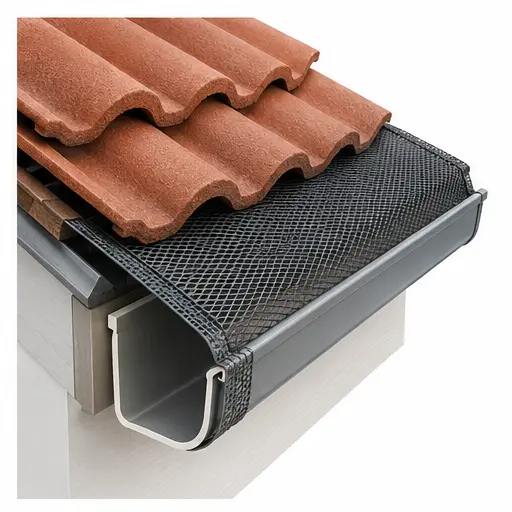 Durable all-rounder
Fixed aluminium mesh
Light, corrosion resistant and available in colours to suit many tiled and metal roofs. It sheds larger leaves across the roof edge and is harder for birds to dislodge than loose inserts. Choose it for a long-run solution where the roof profile and connected materials are compatible.
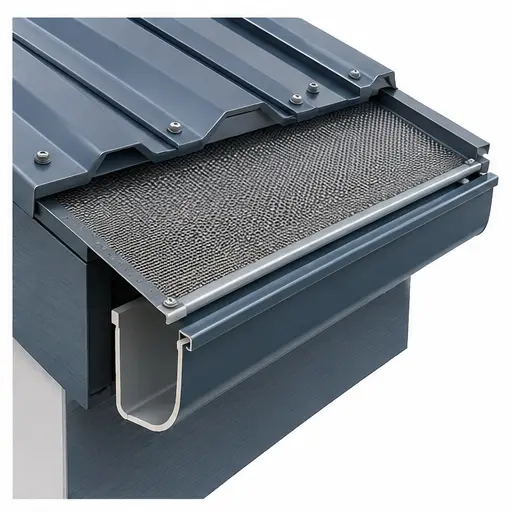 Bushfire or fine debris
Fine steel or certified ember mesh
Smaller apertures can reduce fine litter and ember entry. Choose only a documented system suitable for the property's current BAL design and roof materials; a generic “fire rated” label is not enough for every site.
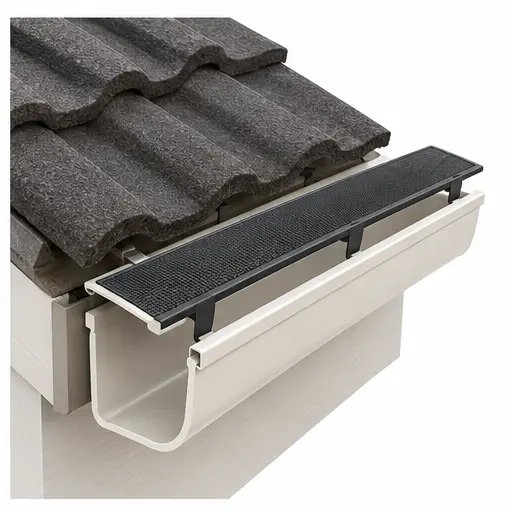 Lower-cost retrofit
Clip-in screen or mesh strips
Plastic or light metal strips can suit straightforward eaves gutters and are easy to replace. They cost less, but can lift, warp or leave gaps on complex profiles. Avoid combustible plastic where the property's bushfire requirements call for non-combustible protection.
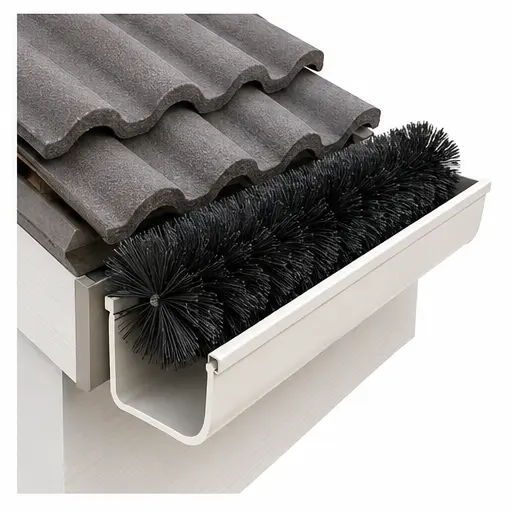 Quick and removable
Full-length gutter brush
Bristles sit inside the gutter and intercept coarse leaves without roof fixings. Choose it for a simple retrofit where frequent inspection is practical. Fine silt passes through and leaves can lodge in the bristles, so it is not a fit-and-forget solution.
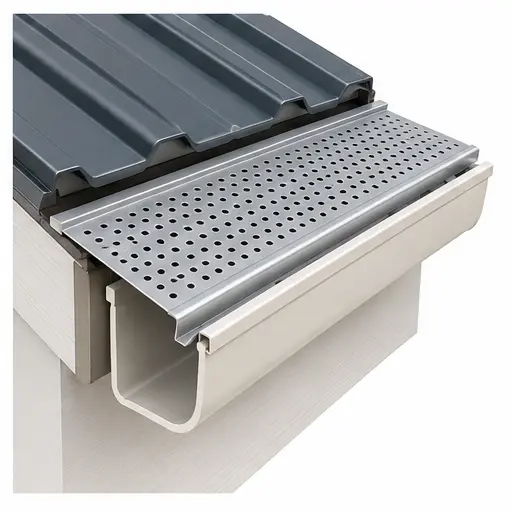 Rigid cover
Perforated metal covers
Rigid covers can be durable and resist larger debris, but their water-entry area, access panels, joins and compatibility must suit the gutter. They can be useful on simple runs where the product has a clear maintenance method.
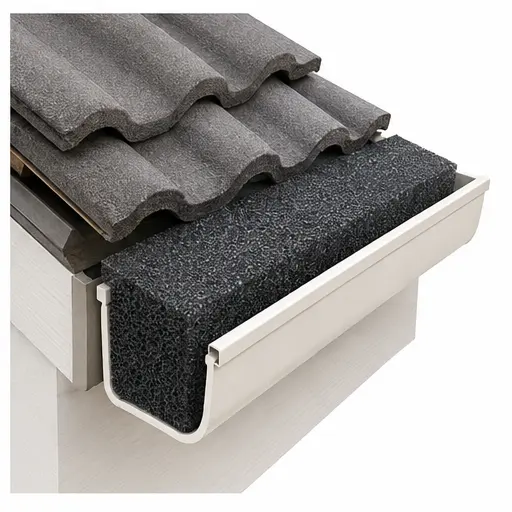 Lowest initial cost
Foam inserts
Foam is easy to place but can retain fine debris, moss and moisture and can make the gutter condition difficult to inspect. It may suit a short-term or very specific application, but it is not our usual first recommendation for Adelaide homes.
Indicative supplied-and-installed pricing
| Gutter guard option | Indicative price | Most suitable when |
|---|---|---|
| Clip-in plastic or light screen | $18–$30 per metre | Simple, accessible single-storey runs where a lower-cost removable guard is acceptable. |
| Full-length bristle gutter guard | $20–$35 per metre | Coarse leaves and a quick retrofit, with regular removal or cleaning planned. |
| Fixed powder-coated aluminium mesh | $35–$55 per metre | A durable whole-gutter system on compatible tiled or metal roof profiles. |
| Fine steel or specialist ember mesh | $45–$70 per metre | Fine debris or a documented bushfire design requiring a specialist product. |
Indicative Adelaide planning guide, including common materials and straightforward single-storey installation, current 25 August 2026. Gutter cleaning before installation, steep or two-storey access, valleys, corners, roof repairs, removal of old guards and certified bushfire systems may add cost. A site-specific quote confirms the product, metres and installation detail.
Installing over compacted silt hides moisture and leaves the outlet restricted from day one.
Mesh, trims and later sealant must not block slots, spacer gaps, rainheads, sumps or emergency overflows.
Valleys, outlets and the gutter beneath the guard still need scheduled inspection and occasional cleaning.
Gutter leak repairs start with the pattern of water.
A drip from a joint does not always mean the joint is the original fault. Water may be backing up from a blocked outlet, ponding at a low point, running behind a high-back gutter or escaping through an overflow path that has been restricted. A useful inspection records when it leaks, where water first appears and what happens at the nearest outlet.


Movement or failed seal
Thermal movement, poor preparation or an incompatible sealant can open laps and corners. A repair needs a clean, dry, sound surface, the correct joint detail and a compatible sealant—not another layer over contamination.
Split, loose or poorly formed
Movement and ponding often show at ends. Refastening or resealing may suit a sound component; a fractured, distorted or rust-thinned end may need replacement.
Pinhole or section corrosion
Small perforations can indicate wider coating loss. Probe the surrounding condition carefully; repeated spot patches are poor value where the base metal has thinned along the run.
Overflow or flashing issue
Water behind the fascia can result from high water level, insufficient overflow, a blocked outlet, poor roof overhang or apron/flashing details. Sealing the visible drip may redirect water into the building.
Sagging or incorrect fall
Standing water adds weight and accelerates deterioration. Brackets, fascia condition and the high point may need correction before the gutter can drain reliably.
Restriction mistaken for a leak
Leaves, compacted silt, nests or a deeper stormwater obstruction can make a sound gutter spill. Clear and test the full accessible path before specifying a joint repair.
Common repair methods and their limits
| Repair | When it can suit | When a bigger repair is needed |
|---|---|---|
| Clean, prepare and reseal a lap, corner or stop end | Sound, correctly aligned metal with a localised failed seal. Use a compatible neutral-cure roof-and-gutter silicone on a clean, dry substrate. | Rust-thinned metal, movement, a fractured component or repeated failure. |
| Refasten and reseal a loose joint | A sound lap where mechanical restraint has loosened and the original water path remains correct. | Deformed profiles, failed fascia or a joint that cannot accommodate movement. |
| Local metal patch or section repair | One isolated defect with sound surrounding material and compatible metals. | Widespread perforation, coating loss, multiple pinholes or incompatible runoff. |
| Rehang or regrade the gutter | Local ponding caused by brackets, alignment or a repairable low point. | Damaged fascia, incorrect system geometry or insufficient outlet and overflow capacity. |
| Replace the affected run | Corrosion, splitting or deformation extends beyond a reliable local repair. | Roof-area, gutter-size or overflow changes also require plumbing design advice. |
Silicone is a joint material—not a substitute for sound metal.
For coated-steel roofing and rainwater goods, current BlueScope guidance calls for neutral-cure silicone with at least 90% silicone content and compliance with ASI Technical Specification TS-001. The specific product must still be compatible with every adjoining material and applied to the manufacturer's preparation and cure instructions.
Consider section replacement where metal is rust-thinned or perforated beyond one isolated point, the profile is deformed, several laps have failed, ponding cannot be corrected locally or the existing material is incompatible with the proposed repair. Capacity, overflow and fascia condition should be assessed at the same time.
Overflow can enter the building
Box gutters, sumps and rainheads may sit within the roof footprint. A blocked outlet, undersized overflow, poor fall or failed lap can therefore send water indoors. Keep every sump and overflow visible and clear. Persistent ponding or a changed catchment needs a licensed roof plumber or other appropriate specialist—not an extra bead of silicone.
Two roof planes meet in one narrow path
Valleys carry concentrated water and collect gum leaves, needles and tile fragments. Build-up can divert water sideways under tiles, over valley upstands or onto a blocked gutter outlet. Clean valleys with the gutters, and more often after storms or heavy leaf fall; check the valley metal and adjacent tiles while the debris is removed.
Tiled, metal and low-pitch roof care
Tiled roofs
- Cracked, chipped, slipped or poorly seated tiles.
- Deteriorated ridge or hip bedding and pointing.
- Blocked valleys and debris beneath tile edges.
- Cracked flashing, failed penetrations or displaced valley metal.
- Sagging roof lines or widespread tile movement requiring specialist assessment.
Tiles can crack under foot. Visual checks should be made from safe access points and repair work should be handled by appropriately qualified trades.
Metal and Colorbond roofs
- Loose screws, degraded washers and lifted sheet edges.
- Surface corrosion, cut-edge corrosion or incompatible metal runoff.
- Debris trapped behind penetrations, solar panels and flashings.
- Failed sealant at laps, cappings and penetrations.
- Scratches or coatings damaged by tools and abrasive cleaning.
Use products compatible with the roofing manufacturer's coating system. Copper, lead, treated timber and unsuitable fasteners can create corrosion problems.
Box gutters and low-pitch roofs
These systems deserve particular care because ponding or overflow may affect the building interior. Keep sumps, rainheads and overflow paths clear, and obtain professional advice for persistent ponding, water marks, low freeboard or any change to the connected roof area.
Cracked tiles should be identified, matched and replaced.
A crack may be only one part of the leak path
Concrete and terracotta tiles work as overlapping units. A broken tile, displaced tile or blocked sidelap channel can interrupt that drainage pattern, while failed flashing or a valley issue nearby may produce a similar internal symptom.
- Replace cracked or broken tiles with the correct profile and a compatible colour where practical.
- Reposition slipped or poorly seated tiles and check why they moved.
- Clear sidelap water channels and debris beneath tile edges without damaging the tile.
- Inspect around valleys, flashings, penetrations and ridge caps rather than assuming the first crack is the only fault.
A dab of sealant or mortar over a cracked tile can conceal the fracture, interfere with drainage and make later removal harder. Manufacturer guidance is to replace cracked or broken tiles. Roof access itself can break more tiles, so matching and installation are best handled by a suitable professional.
Repointing protects the joints; bedding supports the caps.
These terms describe different layers. Bedding is the mortar bed that holds ridge and hip caps in position. Pointing is the exposed weather-facing layer that seals and finishes the edges and joints. Old mortar can crack, fret or detach after years of heat, rain and roof movement, while the caps themselves may become loose.
Caps stable, bedding sound
Where the caps remain secure and the underlying bed is serviceable, deteriorated pointing may be removed and renewed with a compatible approved system.
Caps loose or bedding failed
Loose, out-of-line caps or fractured and missing bedding generally need to be lifted and reset in new bedding before the weather-facing pointing is applied.
Movement or repeated failure
Widespread cracking, sagging, displaced roof sections or repairs that fail repeatedly can indicate movement or another underlying defect that a surface repair will not solve.
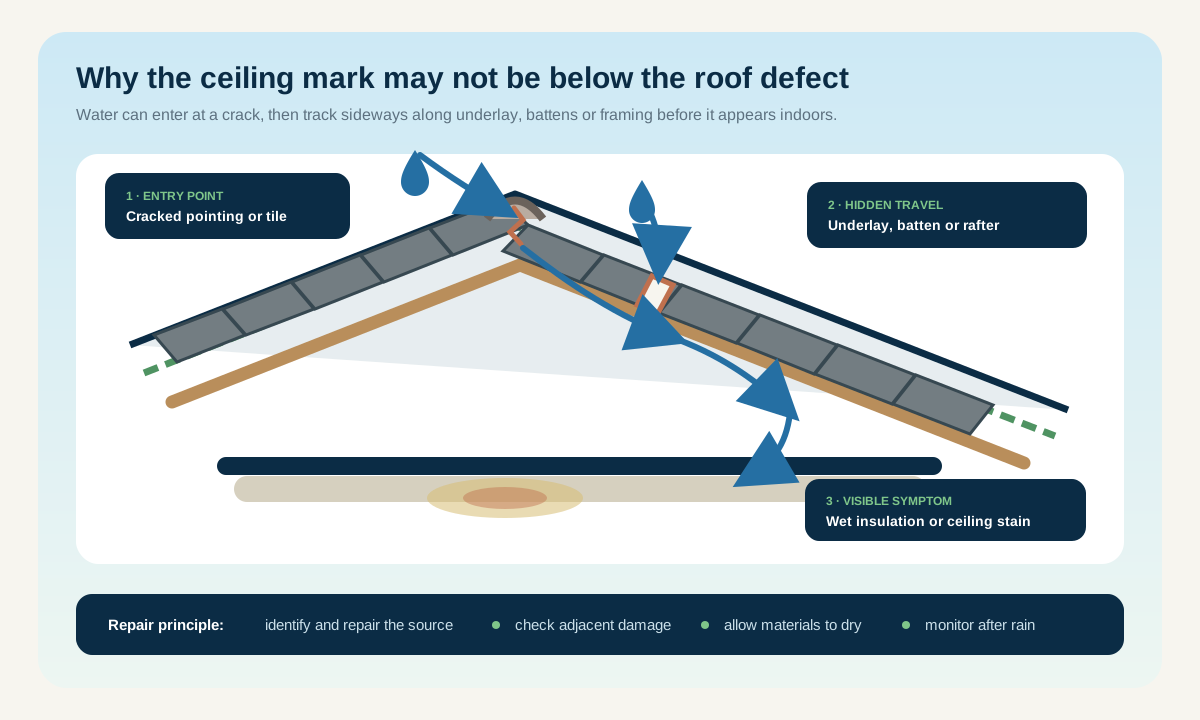
Why deteriorated mortar should not be ignored
Cracked or detached pointing can expose the bedding edge or create a path beneath a cap.
Wind can push water through a gap that may not leak during light, vertical rain.
Moisture may run along underlay, battens, rafters or penetrations before it drops.
Wet insulation, ceiling stains, peeling paint, mould or timber deterioration may follow if entry continues.
Not every hairline surface mark is an active leak, and not every ceiling stain comes from ridge mortar. A sound repair records the defect, checks whether caps and bedding move, reviews nearby tiles and flashings, and monitors the result after suitable rain.
A blocked downpipe can be four different problems.
Start at the top and follow the water down. A visible leaf plug at the outlet is different from a compacted blockage in an offset, a failed connection at ground level or an obstruction in the underground stormwater line.
- Water spilling over close to one outlet or a valley.
- Gurgling, slow drawdown or water backing up in moderate rain.
- Leaks at elbows, offsets or joints and stains down the wall.
- Water escaping where the pipe meets the ground or underground drain.
Outlet entry
Leaves, seed pods, moss, nests or gutter-guard debris bridge the opening. Clear the surrounding gutter as well as the hole.
Bend or offset
Compacted material can lodge where the pipe changes direction. Access may require a section to be disconnected rather than pushed deeper.
Lower pipe or shoe
Crushed pipe, slipped joints or sediment near the base can restrict flow and wet the wall or ground.
Underground or charged line
Roots, silt, collapsed pipe or a full rainwater system require suitable plumbing diagnostics and drain-clearing equipment.
Simple outlet protection: mesh, baskets and brush inserts
A small guard at the gutter outlet can be a sensible targeted option where large leaves repeatedly enter an otherwise serviceable downpipe. It protects the pipe mouth after debris has reached the gutter; it does not replace whole-gutter cleaning or fix a blockage deeper in the system.
Visible barrier at the outlet
A removable metal or compatible plastic strainer blocks larger debris. It is easy to inspect, but leaves can pack around the raised dome and reduce the effective outlet area.
From $25 each fitted during a scheduled gutter cleanA low-cost option for some homes
A short bristle insert sits in the gutter over the top of the downpipe outlet. It intercepts leaves while leaving multiple paths for water, and can be lifted out for cleaning. It suits accessible, open eaves gutters with coarse leaf litter—not concealed box gutters, fine silt problems or bushfire designs unless the exact product is approved for that use.
From $35 each supplied and fitted during a scheduled gutter cleanNeat, but detail matters
Mesh can be shaped over or around the opening. It should be securely fixed, compatible with the gutter and still removable for service. Fine mesh may require more surface cleaning during heavy leaf fall.
Quoted to suit the outlet and roof systemA standalone visit has a minimum service charge and is quoted after access and quantity are known. Outlet guards reduce large debris entry; they are not a guarantee against blockage. Check them after storms and whenever leaves are building around the outlet.
- Observe safely.Note which gutter section spills and whether neighbouring outlets continue to flow.
- Clear the accessible entry.Remove debris around the outlet without forcing it into the pipe.
- Inspect visible joints.Check offsets, brackets, splits, disconnections and the ground connection.
- Test cautiously.Use controlled flow only where safe; stop if water backs up or escapes somewhere unintended.
- Escalate the hidden problem.Persistent backup after the visible route is clear needs a licensed plumber or appropriate drainage specialist.
Flow testing can show whether water moves through an accessible outlet, but it does not certify the underground system's capacity or condition. Avoid forcing water into a blocked pipe where it may escape beside footings, inside a wall or from a charged rainwater line.
Roof and gutter care for rainwater tanks
SA Health notes that birds, small animals, dust and other pollutants can contaminate roof-collected rainwater. A well-maintained catchment is therefore part of water-quality management, not just building maintenance.
- Keep the roof catchment suitable.Remove debris and review overhanging branches, animal access, flaking coatings and unsuitable roof materials.
- Clean gutters and leaf strainers.Fine sludge is a sign that the catchment and pre-tank controls may need more attention.
- Maintain first-flush devices.Empty and clean them according to the manufacturer's instructions so the first dirty roof runoff is diverted as intended.
- Protect every opening.Check non-degradable mosquito-proof screens on inlets and overflows and make sure lids remain secure.
- Keep overflow legal and clear.A full tank must still discharge safely without damaging the building, neighbouring land or the public stormwater system.
- Inspect the tank.Look for cracks, leaks, odour, excessive sediment and signs of animal access. Seek water-quality advice where rainwater is used for drinking.
Warning signs that need attention
Ceiling rings, bubbling paint, mould, damp insulation, musty odours or drips near external walls.
Stained soffits, wet fascia, peeling paint, swollen timber, rust lines or water appearing behind the gutter.
Pooling against the home, erosion, damp foundations, overflowing pits or water crossing onto neighbouring property.
Sagging gutters, plants, persistent ponding, cracked tiles, loose sheets, damaged flashing or a blocked rainhead.
Water can travel along rafters, sarking, pipes and ceiling members before becoming visible. The first internal stain is not always directly below the original fault.
Know when to stay on the ground
Wet metal, mossy tiles, brittle roofing, skylights, solar panels, overhead services and uneven ground make roof and ladder access dangerous. SafeWork SA has reported serious and fatal falls associated with gutter and roof work.
- Do not walk on a wet, damaged, fragile or asbestos-containing roof.
- Do not lean from a ladder or place it on garden beds, loose paving or uneven ground.
- Do not pressure wash from a ladder or point water under tiles, laps or flashings.
- Keep clear of overhead electrical lines and conductive metal tools.
- Use a professional where two-storey, steep, complex or restricted access is involved.
From 1 July 2026, professional construction work in South Australia involving a risk of a person falling more than two metres is classed as high-risk construction work and requires a Safe Work Method Statement.
Adelaide roof and gutter maintenance FAQs
How often should Adelaide gutters be cleaned?+
Many homes benefit from at least one clean each year. Homes under gums, pines or deciduous trees, or properties with box gutters and concealed outlets, may need checks every six months or more often after heavy leaf fall and storms.
Should gutters be pressure washed?+
Not automatically. High pressure can force water under roof coverings, damage coatings and seals, spread contaminated debris and create a serious ladder or roof-access hazard. The cleaning method should suit the roof, gutter material and access.
Can a blocked downpipe cause a roof leak?+
Yes. A blockage can raise the water level in the gutter and expose weak joints, low back edges or inadequate overflow paths. Water may then enter behind the fascia or roofline even when the roof covering itself is sound.
Can a leaking gutter just be resealed?+
Sometimes a sound, correctly detailed joint can be cleaned and resealed with a compatible product. Sealant is not a lasting repair for rust-thinned metal, a split stop end, poor fall, movement, an undersized system or overflow caused by a blockage; those causes must be corrected first.
What is the difference between roof repointing and rebedding?+
Bedding is the mortar that supports ridge and hip caps. Pointing is the weather-facing layer that seals and finishes the joints. Stable caps with sound bedding may only need repointing; loose caps or failed bedding generally need to be lifted, rebedded and then pointed.
Should a cracked concrete roof tile be sealed or replaced?+
Manufacturer guidance is to replace cracked or broken tiles and reposition displaced tiles. A surface smear can hide a fracture without restoring the tile's fit or drainage path. Matching profile, condition, access and adjacent flashings should be checked by a suitable professional.
Do gutter guards remove the need for cleaning?+
No. Guards can reduce larger leaves, but fine material, seeds and silt still collect. Debris may also build above the mesh or around valleys and outlets, so periodic inspection remains important.
What gutter guard is best for a tiled or metal roof?+
A fixed, roof-to-gutter metal mesh is usually the durable whole-roof option, but its mesh, trims and fasteners must suit the roof profile, debris type, connected metals and any bushfire requirements. Clip-in screens and brushes cost less and are easier to remove, but generally need more frequent checking.
How much does gutter guard installation cost in Adelaide?+
As an indicative starting guide, straightforward single-storey installation may be about $18–$30 per metre for light clip-in screen, $20–$35 per metre for full-length bristle guard, $35–$55 per metre for fixed powder-coated aluminium mesh and $45–$70 per metre for specialist fine steel or ember-mesh systems. Access, roof profile, corners, valleys, cleaning and product certification can change the price.
Can a brush insert stop a downpipe blocking?+
A short brush insert placed over an accessible outlet can stop larger leaves entering the downpipe and may suit some homes. It does not stop fine silt, deep pipe or underground blockages, and leaves can bank up around the brush, so the outlet must still be inspected and cleaned.
What should I check after a major storm?+
From ground level, look for displaced roofing, overflowing or sagging gutters, loose downpipes, new ceiling marks and water pooling near the house. Avoid climbing onto a wet or damaged roof and arrange professional assessment where necessary.
Further reading

Prefer clear photos and practical observations?
An eligible Koala Contractorz gutter clean includes a complimentary visual roof check from safely accessible work areas and completion photos. Any repair work is scoped and quoted separately.
Request a gutter clean